If you’ve ever heard of Medellin, Colombia, it was probably in the same sentence as Pablo Escobar. The city was home to the rise and fall of cocaine lord El Patron (The Boss), and as a result was put on the map for all the wrong reasons. Once named the most violent city in the world, Medellin has been evolving at an exponential rate ever since Pablo was taken out of the game in 1993. Whilst the dark memories of the city’s past are still strong, for Medellin locals today they are secondary to the pride and focus of the city’s innovative future.
The government (whilst still questionable and corrupt) has invested millions in it’s Democratic Architecture projects which aim at developing the city’s most destitute areas and transforming them into stunning monuments of public insfrastructure. Amongst the list lies multiple libraries, art installations and the ongoing development of the above ground railway and cable car network.
At first all of these seem like natural things for any city to invest in – they are. The difference here is the sense of ownership and pride that the people have towards these developments. Nothing appears to be taken for granted and the cleanliness and order of the the railway and cable car network is a testament to this. History and politics aside, Medellin is a beautiful city that actually reminded us of Melbourne in many ways (not just because it’s also coffee obessed). If you’re heading to Colombia, definitely find the time to pass through, and make sure you do it’s famous Real City Walking Tour.
 Arriving in downtown Medellin.
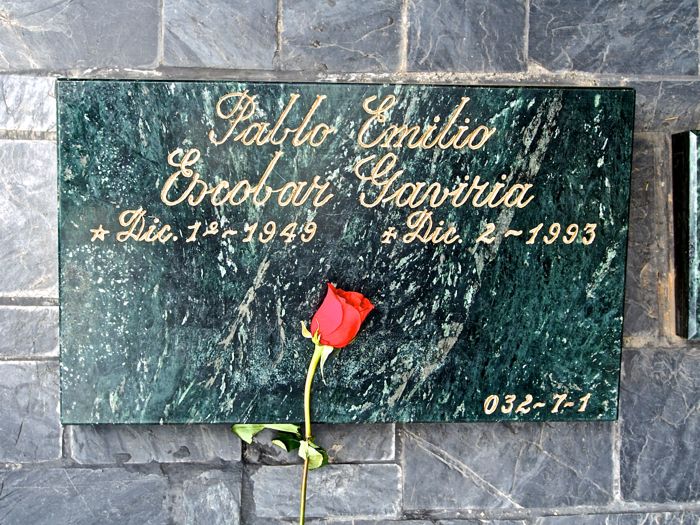 Pablo Escobar’s grave.
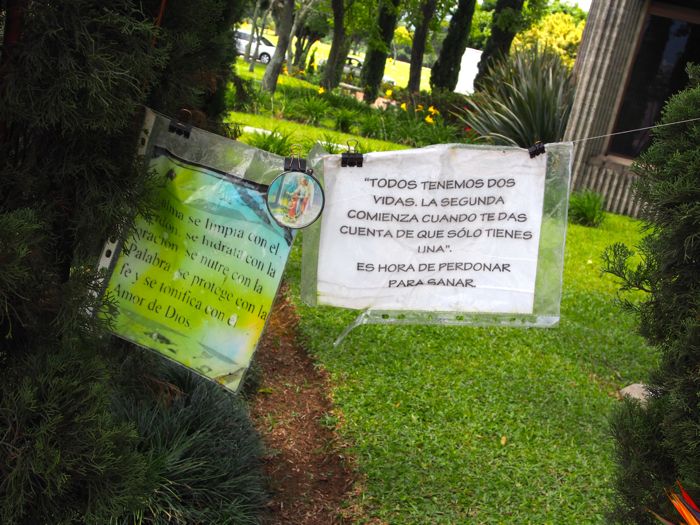 “We all have two lives. The second begins when you realise you only have one.” For the most part, Medellin has decided Pablo was a bad guy however there are still a few supporters around who believe he was a patron saint of the poorer local communites as he donated millions to building schools and community projects. These notes were placed above his grave.
 Train station panoramic.
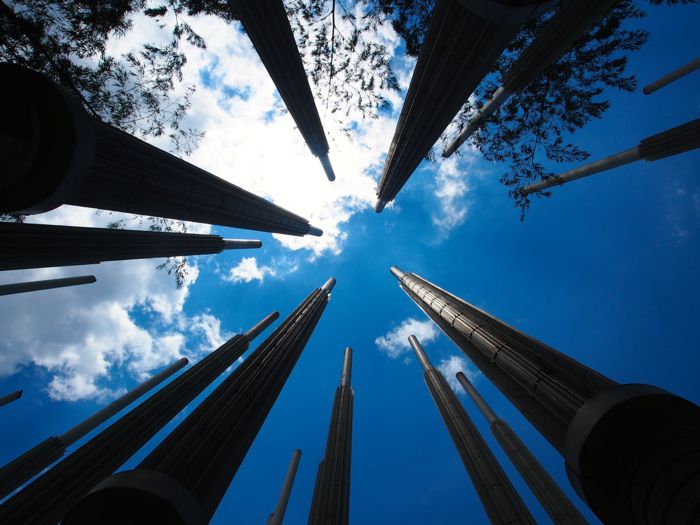
Bosques de Luz (The Forest of Light). Recent example of Democratic Architecture in Cisneros Square.
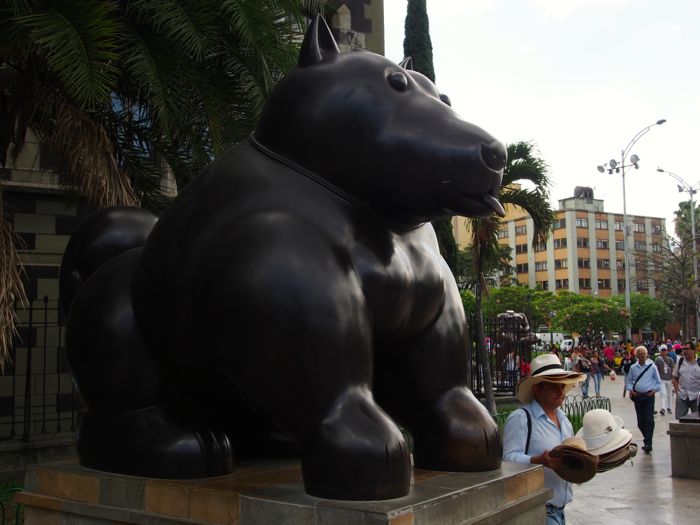
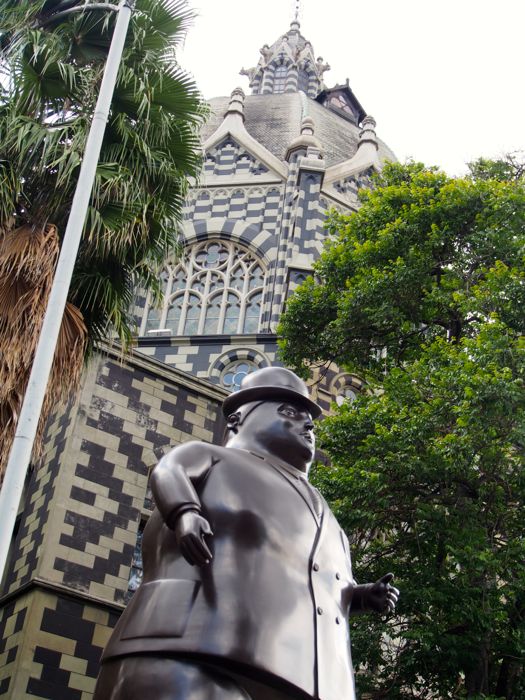
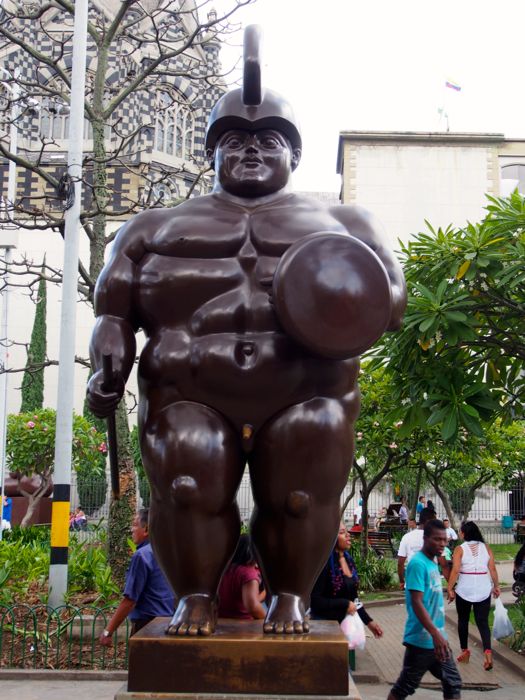 Botero Plaza, filled with 23 sculptures donated by Fernandon Botero in 2004 as part of the nearby museum’s renovation. Botero doesn’t believe he has ever sculpted or painted a fat person, but that his “…exaggerations of volume and size area a glorification of sensuality and life.”

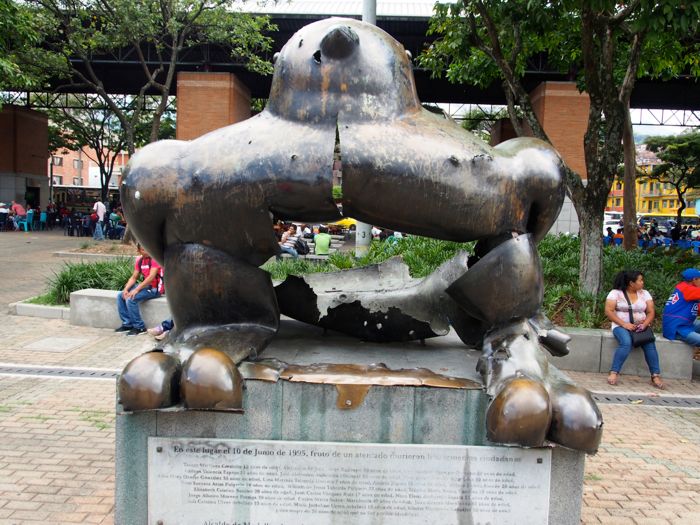 In 1995 a bomb was placed underneath this Botero bird sculpture during a concert in the square, killing 31 people and leaving many more injured from flying shrapnel. Its still unknown who planted the bomb and what their motive was.
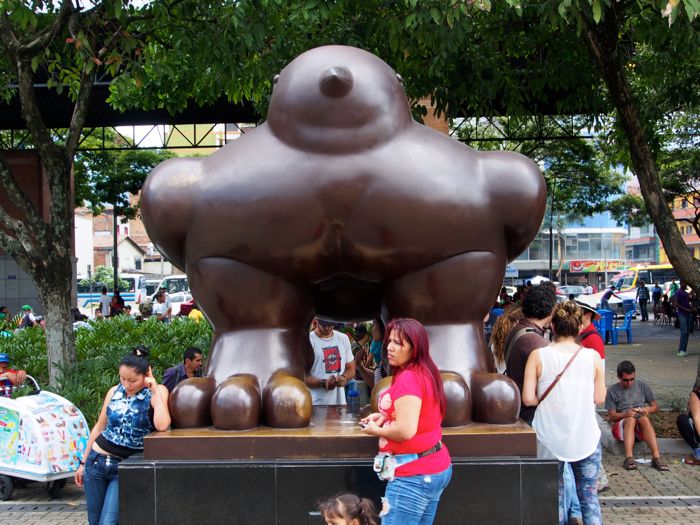 In 2000, Botero donated a new bird sculpture to sit beside the exploded shell of the previous sculpture. Initially the council suggested that they replace the old with the new but Botero demanded it remain as a relic of the the city’s past. The two now sit beside each other in the square as metaphor for the city’s damaged past and shiny future.
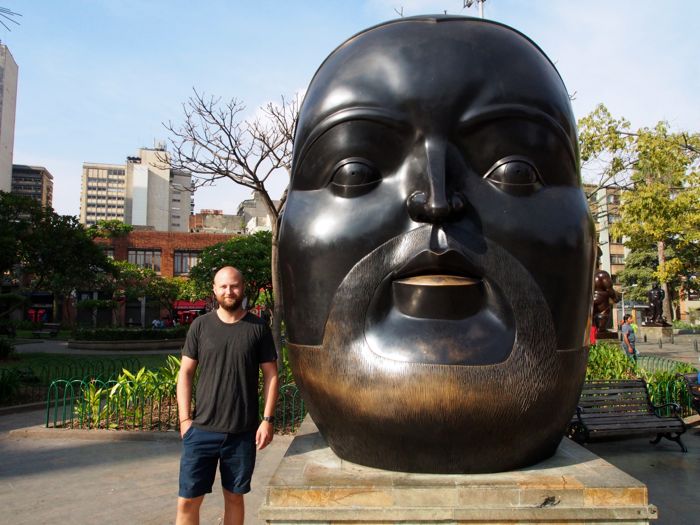 Ben liked this one.
 Every couple of blocks in Medellin there is another plaza and on Sunday they’re filled with families, musicians and good vibes.
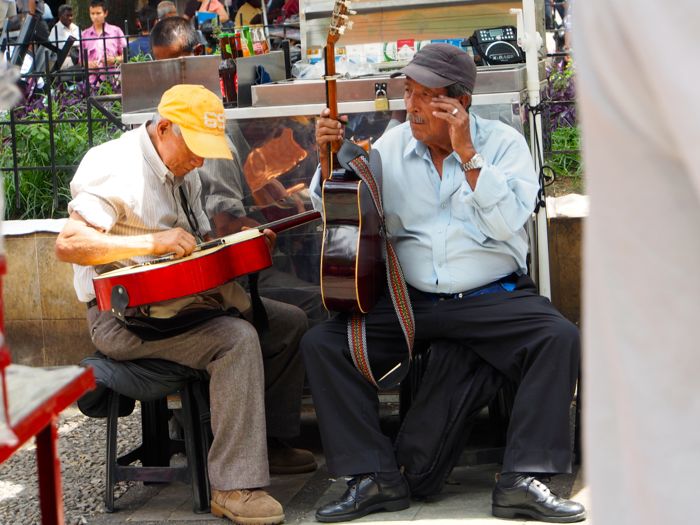 What happens when young buskers get old in Melbourne? Where are they? These guys were awesome.
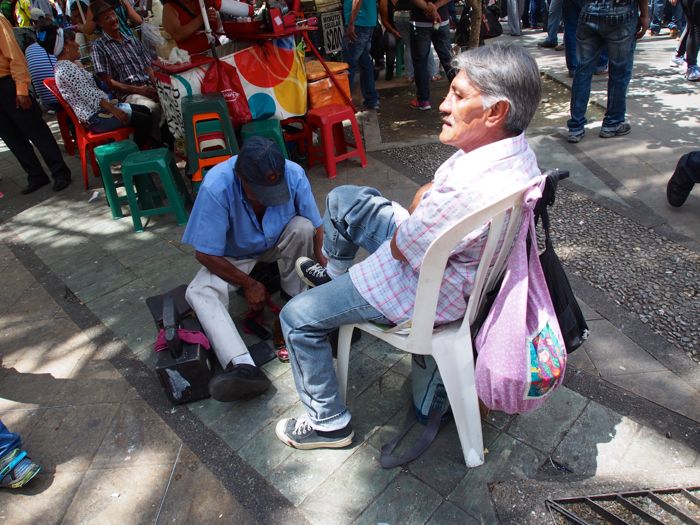 Getting a Sunday sneaker shampoo for the week ahead.
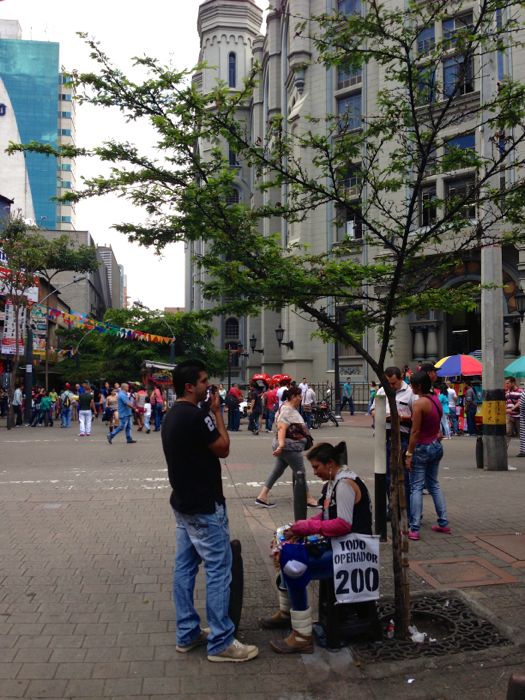 If you don’t have your phone and you you’ve got to make that call, don’t worry. These guys are everywhere willing to lend you their’s for a fair price. Ask Ben the story about our friend who used this service – it’s a good one.
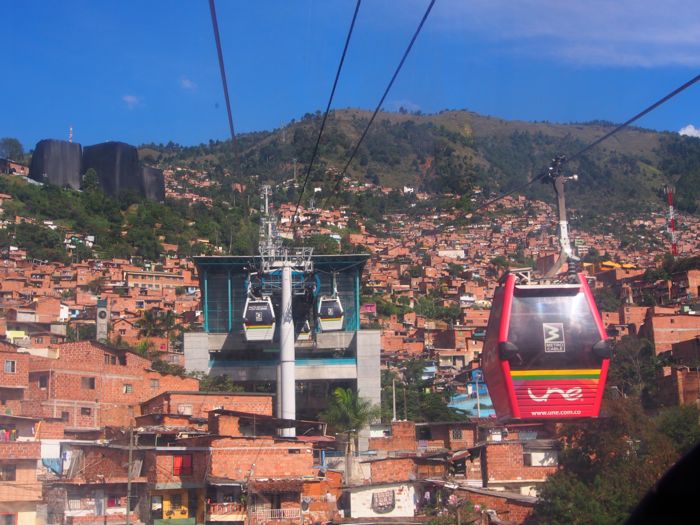 Cable car connecting the mountain villages with the CBD. A change that provided a world of opportunities for people in poorer outskirts to work and be connected with in the main city. In the top left you can also the see the new awesome library that looks like a homage to the bat cave – very cool.
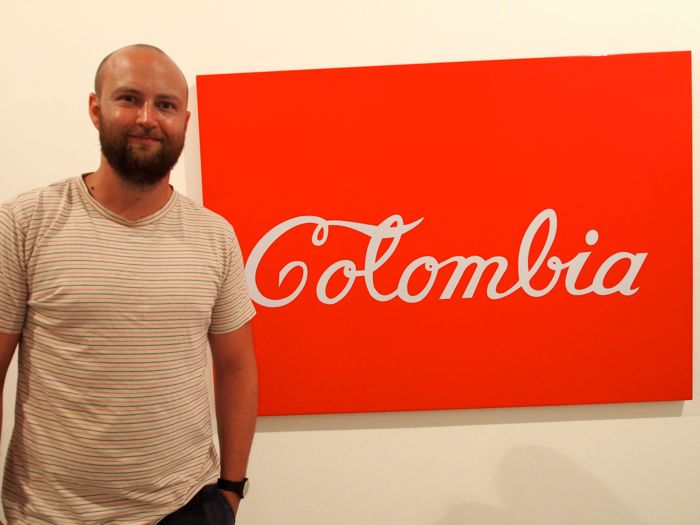 Where we’re at.
 This is Petit Doobie and yes that is how his tongue is planted always. He is a Peruvian hound temporarily adopted by the Frenchmen who owned our hotel. Seriously, his tongue stays like that. Look…
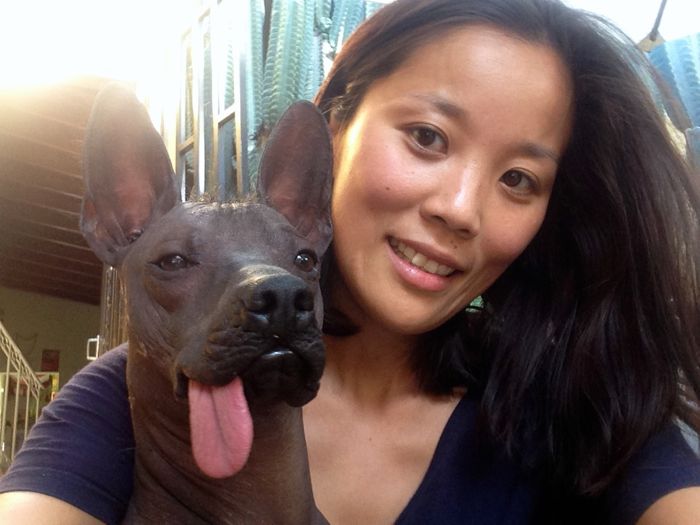 See…
See…
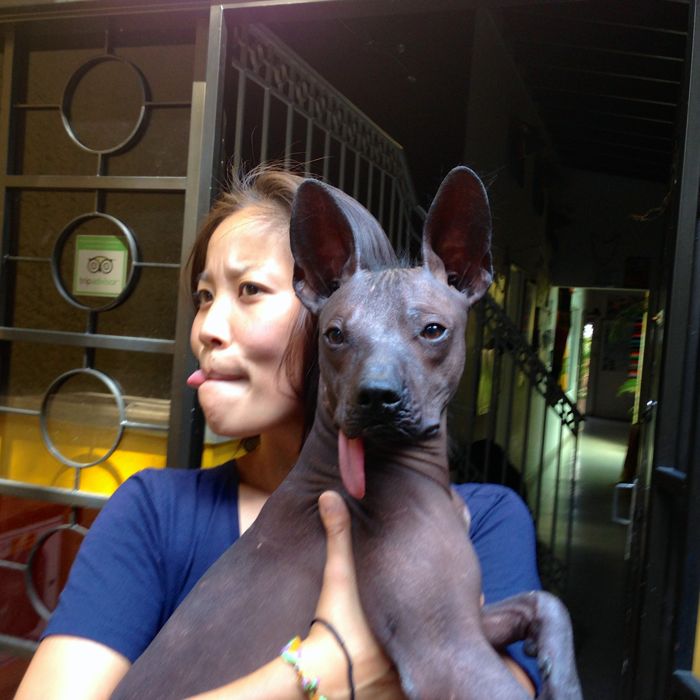 Always.
 hola chicos